
First things first, it is rarely necessary to buy any products in advance of having your baby. Most of them are unnecessary, and if you do really need them they are typically readily available in the UK.
Lots of us have family and friends who have struggled with sore nipples from breastfeeding. It can be normal to experience mild discomfort while you and your baby learn to breastfeed. However, sore, bruised, cracked or bleeding nipples are not normal and can make a mum utterly miserable.
What causes sore nipples?
Nine times out of ten, sore nipples are caused by suboptimal position and attachment. You can often decrease the pain and damage immediately by working on the latch so that baby stops hurting you. There are lots of tips on this website, or consider getting some help from your midwife, a breastfeeding drop in, or a lactation specialist. There is a lot more in my article “Is breastfeeding meant to hurt?”
Sometimes a woman experiences sore nipples because her baby is struggling to get a good latch. This could be due to labour and birth injuries, or issues with baby’s jaw or tongue (a healthcare professional can assess this, and for more on tongue tie click here).
Less common reasons for sore nipples include nipple inversion, being sensitive to a nipple cream or product, and Raynauld’s phenomenon.
Sore nipples after pain free breastfeeding could be due to thrush (see Is this nipple thrush?), an infection, or something baby is doing like teething and biting you.
Sometimes nipples get sore due to rough treatment, such as using an expressing machine on inappropriately high suction or with an ill-fitting flange that hurts.
Treatment for sore nipples
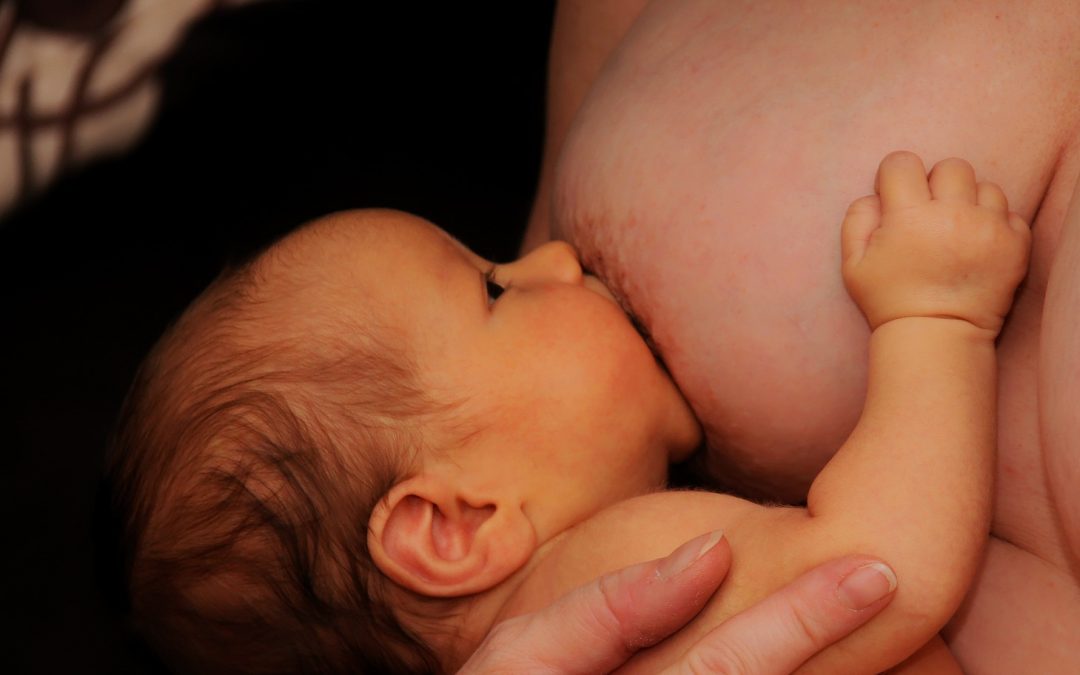
First, get help with positioning and attachment. Baby needs a big mouthful of breast tissue and not to be pulling the nipple away from where it belongs.
Stop using products on your breasts if you think this is the issue. Wash your breasts as normal when you bathe. Change breast pads or bras if they become wet with milk.
Nipple creams, including lanolin ointment, help to prevent scabs forming over cracks. You only need to apply a small amount after a feed, and most brands do not need to be washed off.
As breastmilk is naturally antiseptic, some mothers squeeze out a bit of breastmilk and run it onto the nipple area after a feed, this promotes healing. Others purchase silver cups that sit inside their bra to protect the nipple and also allow it to heal.
Some mums find that raw, grated, chilled carrot can be soothing on sore nipples.
Many women find hydrogel pads from the pharmacist soothing and healing.
If direct breastfeeding is unbearable, you might consider using a nipple shield that forms a barrier between the sore nipple and baby. These can be super helpful for mothers with inverted nipples or those whose babies struggle to stay latched on. Nipple shields get a bad rap from some midwives, but really can be useful tool. For more on shields, click here.
A final option is to stop direct breastfeeding, and instead express milk and bottle feed your little one for a few days while the nipples heal. In the meantime, seek out some skilled support to help you.
Book a free chat or consultation with me from my booking page or give me a call on 07720 425 897.